
For over 60 years, the path to the American Dream followed a predictable administrative trail. For hundreds of thousands of legal residents—students, specialized workers, and spouses of U.S. citizens—the “Adjustment of Status” process was a lifeline, allowing them to transition to permanent residency without ever setting foot outside the United States.
That precedent was shattered on May 21, 2026. Under policy memorandum PM-602-0199, the U.S. government has engineered a “leave first” mandate that effectively upends the lives of roughly 700,000 to one million applicants. What was once a routine administrative step is now a high-stakes bureaucratic trap, forcing legal residents to abandon their homes and careers to gamble on a “consular processing” system that is currently buckling under the weight of global instability and massive backlogs.
The End of “Administrative Grace”: Adjustment of Status is No Longer Routine
The core of this policy shift is a fundamental redefinition of the right to stay. U.S. Citizenship and Immigration Services (USCIS) has reframed the ability to adjust status from within the U.S. as an “extraordinary act of administrative grace” rather than a standard procedure.
By default, the government now mandates that temporary visa holders—including students, H-1B professionals, and tourists—return to their home countries to complete their applications through the Department of State. This move fundamentally strips away the presumption of stability for legal immigrants, reframing their presence not as a path to belonging, but as a rare exception granted at the total discretion of individual officers.
“We’re returning to the original intent of the law to ensure aliens navigate our nation’s immigration system properly,” said USCIS spokesperson Zach Kahler. “From now on, an alien who is in the U.S. temporarily and wants a Green Card must return to their home country to apply, except in extraordinary circumstances.”
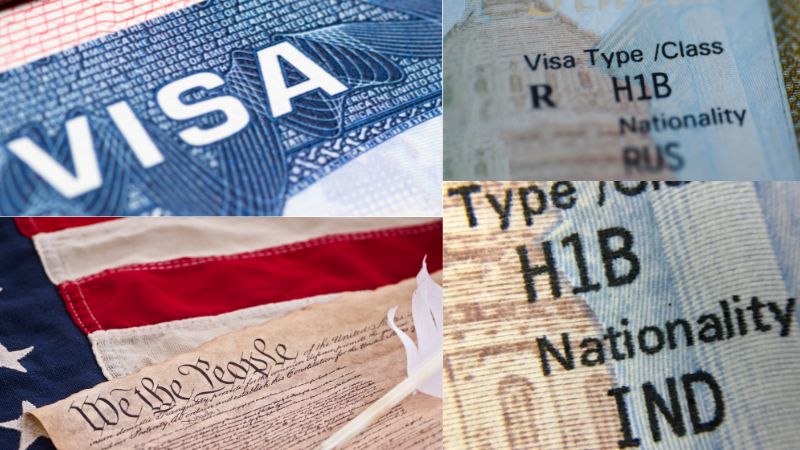
The “Extraordinary Circumstances” Mystery: A Standard Without a Definition
While the new policy allows for exceptions in “extraordinary circumstances,” the administration has notably utilized a procedural shortcut by bypassing “notice-and-comment” rulemaking. Instead of providing a clear checklist for applicants, they have granted adjudicators broad discretionary power to decide cases one-by-one.
Evidence from recent Requests for Evidence (RFEs) reveals that officers are weighing specific “positive factors” to determine if an applicant warrants this “grace.” These include:
- Economic Benefit: Whether the applicant’s role is vital to U.S. industry.
- National Interest: Contributions to fields like STEM, AI, or healthcare.
- Military Service: Past or current service in the U.S. armed forces.
- English Fluency: Demonstrated proficiency in the English language.
This creates a visceral “Catch-22.” Applicants must decide whether to dismantle their lives in America without knowing if these factors will be enough to save them from a mandatory departure.
The 700,000-Person Backlog Trap and the New Financial Toll
The scale of this upheaval is staggering. There are currently 540,000 family-based and 170,000 employment-based applicants caught in this shift. However, the impact is felt most acutely by Indian nationals, who comprise a staggering 1.3 million people in the total green card backlog.
For these individuals, the order to leave is often a dead end. The State Department has already halted immigrant visa processing in 75 countries and maintains strict travel bans or restrictions on 39 others—including “permanent pauses” on migration from certain nations. Applicants from countries like Iran or Afghanistan, where no U.S. consulates exist, are essentially being told to leave with no realistic way to return.
Adding financial insult to injury, a new 1% remittance tax—effective after December 31, 2025—now targets money transfers made via cash, money orders, or cashier’s checks. This tax imposes a direct penalty on the very individuals being forced to move their lives across borders, further draining the resources of families already strained by the costs of international relocation and consular fees.

“It will drive talented people to other countries and make America a less competitive place for business,” warns David Bier, director of immigration studies at the Cato Institute. Others have described the policy as “illogical” and “cruel,” labeling it a “quiet quitting” on the legal immigration system.
Dual-Intent Nuance: A Fragile Shield for H-1B and L-1 Households
Skilled workers on H-1B or L-1 visas, along with their H-4 and L-2 dependents, currently hold a fragile advantage. Because these categories recognize “dual intent,” their pursuit of permanent residency is not technically “inconsistent” with their temporary status.
However, even for these elite professionals in AI and STEM, the “grace” of staying is entirely discretionary. If the U.S. continues to signal that its most talented foreign researchers and their families are no longer welcome to stay during the process, the risk of a massive “brain drain” becomes a reality. As competitors like China and Russia look to capitalize on American volatility, the U.S. risks losing the innovative talent that has called the country home for years.
Conclusion: A New Era of Uncertainty
The “Leave America” mandate marks a pivot toward an isolationist immigration philosophy that treats legal residency as an “extraordinary” gift rather than a reward for following the rules. While legal challenges regarding the administration’s use of procedural shortcuts are inevitable, the current landscape is defined by operational uncertainty.
As the U.S. immigration system pivots toward a “leave first” philosophy, what happens to the innovative talent and family units that have already called America home for years?
Immigration is no longer just about filling out paperwork—it’s about managing risk.
Whether you are looking to adjust your status, secure a green card, or protect your family, we are here to guide you through the uncertainty with clarity and confidence. Let’s discuss your options privately.